The Illusion of Success: Why Finishing in the Top 40% of a Trading Challenge is a Quiet Failure

Breaking down the real metrics behind the Illinois Wesleyan finance challenge performance and the myth of participation trophies in high finance.
Key Takeaways
- •Top 40% placement is marketing success, not investment performance success.
- •The real value lies in beating market benchmarks, not cohort ranking.
- •Simulated trading labs cannot replicate the resource disparity of real high finance.
- •Future success depends on discarding the 'participation' mindset for contrarian analysis.
The headlines chirp with mild praise: Illinois Wesleyan University (IWU) finance" class="text-primary hover:underline font-medium" title="Read more about Finance">finance students placed in the top 40% of a global trading challenge. On the surface, this is a win for the small liberal arts college, a testament to their financial education program. But let’s pull back the curtain. In the ruthless arena of global finance, finishing in the top 40% is not success; it’s barely avoiding the bottom half. This isn't about participation; it's about performance, and the narrative around these academic competitions often masks a deeper truth about modern finance education.
The Unspoken Truth: Top 40% is the New Average
When you enter a global competition, the goal isn't to place respectably; it’s to dominate. The top 10% separate the elite from the rest. The top 40% means that 60% of the participants—many from institutions with vastly larger resources, deeper data access, and dedicated trading labs—outperformed them. Why are we celebrating mediocrity?
The real winners here aren't the students who placed 40th percentile; they are the universities marketing this result. For IWU, this is excellent PR fodder to attract the next cohort of aspiring investment banking hopefuls. It validates their program without requiring them to dissect the strategies of the top performers. It’s a classic case of framing. We need to stop looking at participation ribbons and start analyzing portfolio returns against benchmarks like the S&P 500. Did they beat the market? That’s the only metric that matters in the real world.
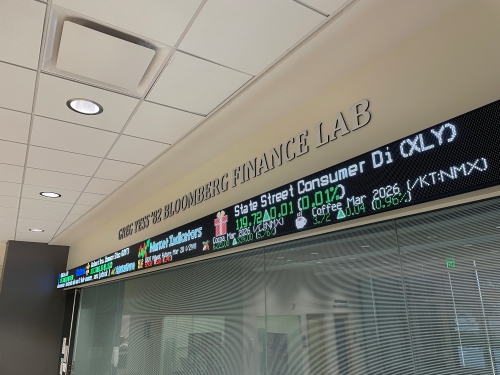
Deep Dive: The Resource Disparity in Simulated Markets
These challenges, often run on platforms like the Bloomberg Market Concepts (BMC) or similar simulators, are imperfect proxies for reality. While they test theoretical knowledge, they often fail to replicate the sheer processing power and proprietary algorithms available to major Wall Street firms. The students are playing chess with plastic pieces against opponents using supercomputers.
The hidden agenda is often curriculum validation. These competitions serve as external validation for professors, but they don't necessarily teach the most crucial, contrarian skills: managing existential risk, navigating regulatory shifts, or understanding geopolitical leverage points—the things that truly move billions. A student who understands the nuance of the Federal Reserve's balance sheet (as detailed by the Federal Reserve) is often more valuable than one who can execute a textbook options trade in a simulation.
What Happens Next? The Prediction
The immediate future for these students is promising, irrespective of their exact ranking. The competition secures them interviews. However, the long-term trajectory depends entirely on their ability to discard the 'Top 40%' mindset. My bold prediction is this: Within five years, the students who truly excelled—the top 10% scorers—will either be in elite graduate programs or have left traditional finance altogether, frustrated by the gap between academic simulation and high-stakes reality. The rest will find solid, respectable careers, but they will always chase the alpha they couldn't capture here. The true test of this program won't be the next challenge score; it will be how many alumni are running hedge funds versus how many are managing corporate treasury departments.
This exercise highlights a critical flaw in modern financial education: prioritizing performance metrics over foundational, adaptive thinking. Success in finance isn't about finishing; it's about surviving the inevitable crash, a lesson no simulation can truly teach. For more on the volatility of modern markets, see reports from Reuters.
Frequently Asked Questions
What is the primary goal of a global trading challenge for university students?
The primary goal is usually to test students' application of theoretical financial knowledge, portfolio management skills, and decision-making under simulated market stress, often serving as a recruiting tool for the participating universities.
How do simulated trading results compare to real-world investment banking performance?
Simulated results often lack the complexity of real-world factors like insider information dynamics, extreme liquidity crises, regulatory bottlenecks, and the emotional pressure that significantly impacts actual investment banking and trading outcomes.
What does finishing in the 'Top 40%' typically imply in a competitive setting?
In highly competitive fields, finishing in the top 40% means that 60% of the competition performed better, suggesting the performance was average or slightly below average relative to the entire global field.
What are high-authority external sources for tracking global finance trends?
High-authority sources include major financial news outlets like The Wall Street Journal, Reuters, The Financial Times, and official regulatory bodies such as the U.S. Securities and Exchange Commission (SEC) or the Bank for International Settlements (BIS).