The State Bank Challenge: Why University Business Competitions Are Rigging the Future of Entrepreneurship

Forget the pitch decks. The real story behind the SUU State Bank Business Challenge reveals the hidden pipeline for future regional economic control.
Key Takeaways
- •The challenge functions more as a vetting process for bankable SMEs than a crucible for radical disruption.
- •Regional banks use these events to secure future clients and maintain local market relevance against national threats.
- •Success in this model often leads to acquisition by larger firms rather than sustained independent growth.
- •Navigating local regulatory capital is a key, often underestimated, skill taught here.
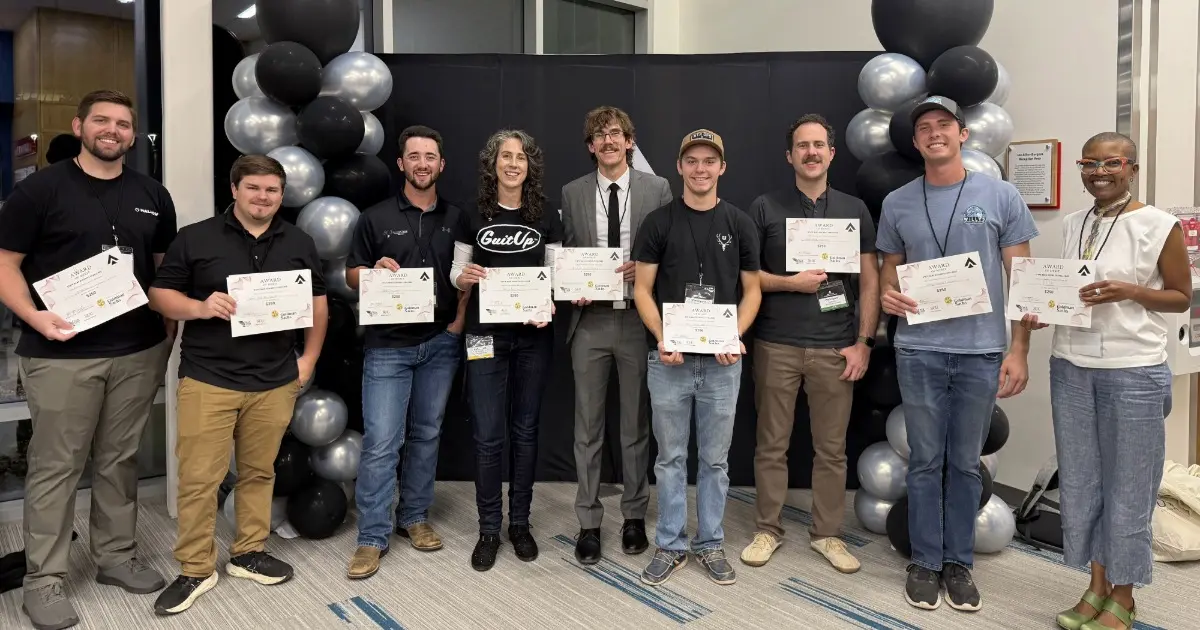
The recent buzz around the Southern Utah University (SUU) Entrepreneurship Center hosting the State Bank Business Challenge sounds quaint: bright students, big ideas, and seed money. But let’s cut through the PR noise. This isn't just about nurturing entrepreneurship; it’s about establishing a controlled ecosystem. Who truly benefits when regional banks fund the next generation of local business leaders?
The Unspoken Truth: Localized Gatekeeping, Not Disruption
Every university claims to foster disruption. Yet, when a community anchor like State Bank sponsors a competition, the unspoken rule is clear: the winning ideas must fit neatly within the existing economic framework. We are not seeing the next Elon Musk emerge from these auditoriums; we are seeing the next generation of reliable, bankable, small-to-medium enterprises (SMEs) that will keep the local financial gears turning smoothly. This isn't a flaw; it’s the design. These challenges are excellent training grounds for business development, focusing on viability and local compliance over radical, market-shattering innovation. The true winner here is the incumbent financial institution, securing future clients before they even graduate.
The focus on meticulous business plans, often emphasized in these settings, favors risk-averse thinkers. True technological leaps often defy easy quantification on a five-year projection sheet. This system subtly filters out the truly revolutionary concepts in favor of the immediately implementable. It’s a pipeline, not a lottery.
The Deep Dive: Why Regional Banking Matters More Than Ever
In an age dominated by Silicon Valley behemoths, the strength of regional economies hinges on robust local banking relationships. This challenge is a strategic investment by State Bank into maintaining relevance and market share against national competitors. For students, mastering the art of securing local funding—understanding local regulations and community needs—is a crucial, often overlooked, part of the entrepreneurship journey. It’s a masterclass in navigating regulatory capital structures, something venture capital environments often gloss over.
Consider the precedent set. If the winning startup solves a local problem—say, logistics for regional agriculture—it immediately strengthens the local tax base and provides State Bank with a case study proving their commitment to community growth. This is sophisticated relationship marketing masquerading as philanthropy. For more on the importance of local economic anchors, see the analysis on regional capital flow from the Federal Reserve Bank of St. Louis [https://www.stlouisfed.org/].
What Happens Next? The Prediction
The immediate future will see the winning startup receive funding and intense mentorship, likely integrating deeply with State Bank’s existing commercial lending departments. However, the long-term prediction is this: Within five years, at least two former participants from this specific challenge cohort will pivot their business models away from pure innovation toward becoming highly successful, acquisition-ready entities sold to larger, non-local corporations. The local incubator primes them for sale, not necessarily for sustained, independent regional dominance. This model breeds excellent acquisition targets, which is a different kind of success entirely.
This pattern mirrors historical trends where local support systems inadvertently create optimized exit opportunities for larger national players, as detailed in studies concerning small business scaling in the US [https://www.reuters.com/]. We must watch not just who wins the prize, but who buys the winner later.
Frequently Asked Questions
What is the primary goal of a university business challenge sponsored by a local bank?
While promoting student innovation is the stated goal, the underlying purpose for the bank is often to establish early relationships with promising local businesses, secure future clients for lending services, and bolster community goodwill.
How does this type of competition differ from Silicon Valley-style accelerators?
University/Bank challenges typically favor proven, scalable business models with low immediate risk, focusing on local compliance and immediate viability. Silicon Valley accelerators often tolerate higher risk for potentially exponential, market-disrupting returns.
Are these challenges genuinely helpful for radical innovators?
Rarely. Radical innovators whose business plans defy standard financial projections are often filtered out in favor of more predictable, bankable ventures. They are better suited for specialized deep-tech or pure VC funding routes.
What is the long-term economic impact of these localized funding events?
They stabilize the local SME sector, ensuring a steady stream of compliant, debt-servicing businesses. However, they can also create an 'exit culture' where successful local companies are inevitably sold to national conglomerates.